
“We’ve been very happy working in Mali.” Q&A with Kodal Minerals
By Matthew Bird
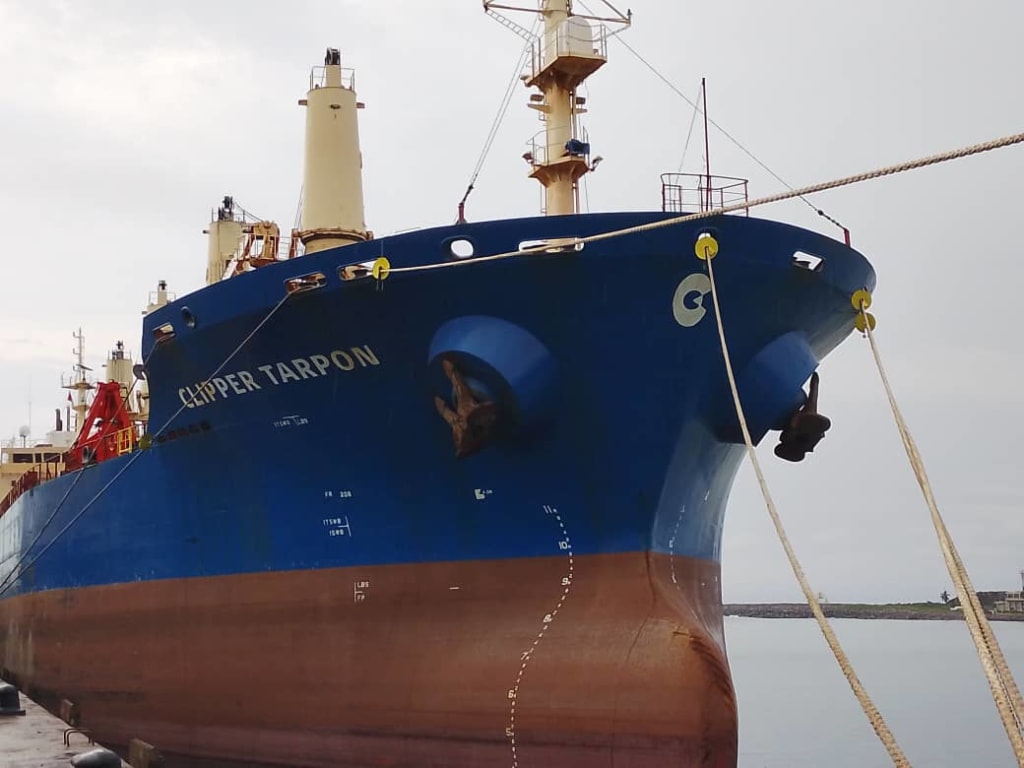
UK-listed Kodal Minerals began production at its Bougouni Lithium Project in Mali in February this year and its first shipment of spodumene left port at the start of December after leaving the mine in October.
Initially focused on gold in West Africa, the company listed on London’s Alternative Investment Market (AIM) in 2013 before pivoting to lithium when it acquired the Bougouni project in 2016.
Benchmark Source senior editor Matthew Bird spoke to Bernard Aylward, Kodal’s CEO, about operating a lithium mine in Mali amidst civil unrest and the involvement of Chinese partner Hainan Mining.
Matthew Bird: Talk me through your recent developments at the mine in Mali.
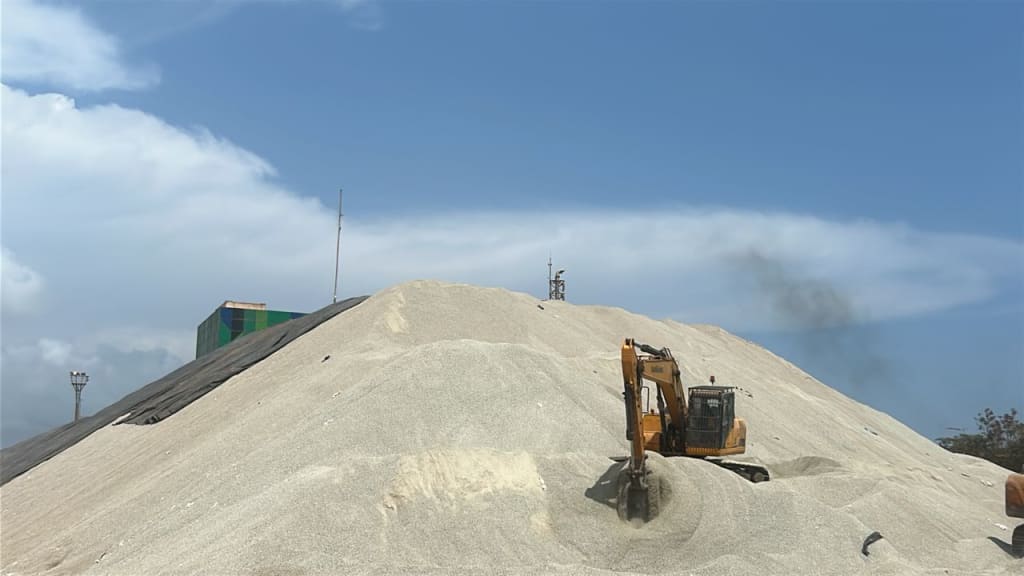
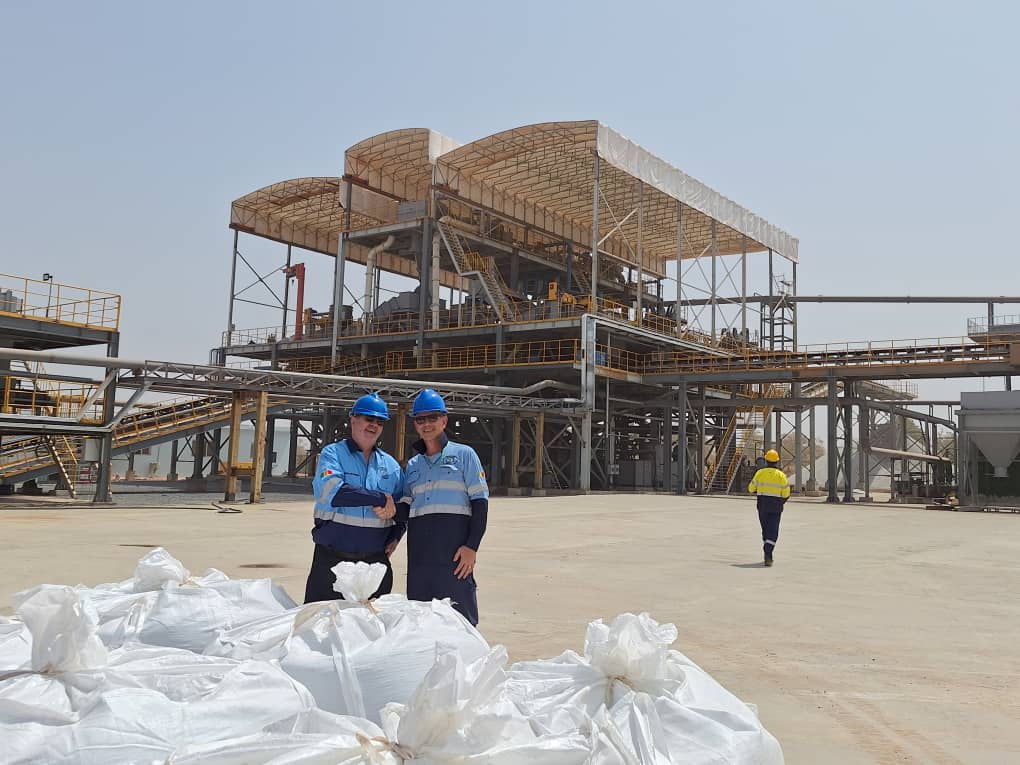
Bernard Aylward: We’ve been very happy working in Mali. We’ve got a really good project. We’ve been able to attract sizable investment from our Chinese partner, Hainan mining. We’ve built our stage one DMS [Dense Media Separation] plant, and we’ve been operating that since February this year on a commissioning and ramp up basis. We’ve produced around 45,000 tonnes of concentrate, and had our first shipment out last week. It’s a fantastic timeline, and I always say it’s a lot of credit to our team for the hard work and the rapid pace we’ve been able to move to develop.
MB: What’s the process for getting a mining licence in the country?
BA: It’s one of those things that I think people sometimes are surprised about, but Mali has really well developed mining legislation, and progression from exploration through to development and mining. We were quite clear on what we needed to do from the start.
Number one for us was to secure the ground to make sure that we could undertake our exploration, our drilling, our sampling. We were able to export a bulk sample, just under 1000 tonnes to China for multiple rounds of metallurgical test work. When we say fast track, it really involves not just the exploration, drilling, interpretation, and follow up; for us, it was actually also commencing our environmental assessment in late 2017, so that we were able to complete that work, report to the environment ministry, have the inspections, and have all the work done to actually get early approvals for our environmental and social impact assessments, which we required before we could lodge a mining licence application.
That was then followed by our feasibility study, assessment of the processing plans, and the requirements for the treatment which we completed in 2019. We lodged a mining licence application in 2020, and again, that’s really quick – less than four years to have that put together and put in front of the government. We had a Covid hiccup, which held us back a little bit, but in 2021, we actually had the mining licence granted.
We then sought to find a partner to help us develop that. We secured Hainan in 2023, received the funds, then started construction in 2024, and had our first product in February 2025.
Security of tenure is really important wherever you operate. Particularly, we find in West Africa, that compliance reporting and the relationship with the government is important. That way, they know what we’re doing, we know what their expectations are, and we can keep control of our project. That’s number one.
Number two is understanding the relationship with the community. Part of that is essentially the ESIA [Environmental and Social Impact Assessment]. We know what they need, and they know what we can do. Those things are really critical to allow us to continue to develop. So we’ve had no community issues, no one attempting to stop us. They all actually want us to work. We’re bringing a lot of jobs to the community. We’re bringing a lot of add ons as well. Not just the direct employment, but all the systems and people around. We’re improving roads, improving schooling, improving water, and those sorts of accessories to the community are really important for us as well.
MB: That’s painting a relatively positive picture, but presumably operating and developing a lithium mine in Mali is going to have challenges. Could you talk me through the challenges of operating in Mali?
BA: Well, there’s always challenges. We have Mali being a land locked country, we rely on trucking for the import of all our construction material. Mali has had significant major mining operations since the early 1990s late 1980s so we’ve got a very mature and well trained workforce. So that’s a plus, but actually, the Bougouni area had no previous mining prior to us and Goulamina developing there. In that way, it was a new thing to the area, so ensuring the community came along with us [was important].
I would suggest that building a mine in Mali has the same challenges as building a mine anywhere, but perhaps it requires far more focus on the planning and preparation. Making that you’re ahead of where you need to be is always important.
In terms of quality of people, we found really good local contractors. At the peak, we had around 650 employees, of which about 630 were Malian, and of that, around 330 were directly from the region that we operate in. Those things again, rather than present a challenge, actually give us an opportunity to A) get people who are local and want to be there and B) get some bit of kudos in the community for what we’re doing.
MB: There’s major civil unrest in Mali at the moment, fuel blockades and militant action. How would you say that Kodal has been impacted by that unrest, and how are you responding to that increased risk to fuel access and potential risk to personnel?
BA: Kodal has been operating in Mali since 2016 and, personally, I’ve been operating in West Africa and Mali since around 2007. What I would say is that Mali’s had periods of insurgency ongoing since around 2012/13, especially in the northeast of the country. So it’s not something that we see as new. In the past, we would have said it was a long way from where we are. What’s changed in this last 18 months would have been the actions of the insurgent group moving more away from fighting in the northeast to becoming more guerrilla tactics around the south and the west of Mali. They’re very good at making a lot of noise about what they’re doing in terms of potential fuel blockades, and claiming that they’re surrounding and [could cause the] potential imminent fall of the capital.
I was in Mali in early November for the opening of our mine. The President was on site, we had the majority of the ministers, lots of dignitaries, embassy and consular officials, and local community. Yes, there’s certainly an awareness of the change of tactics of these insurgents. However, speaking to our fuel contractor and other fuel contractors, they’re still confident they were getting fuel through, and it was clearly arriving into Bamako.
We’ve had no problem on site, and we may be in a fortunate position that we are relatively close to the Cote d’Ivoire border. Our contractor brings fuel from Cote d’Ivoire up into Mali. In discussion with the contractor, he’s basically been able to tell us that he can guarantee fuel to the people he has long term contracts with. So, on that score, we don’t think that we have an impact. Our explosives contractor had an issue at the Guinea border several months back, and that could have been an impact on us. But our pit was still under water from the wet season, so we weren’t delayed by the delay of explosives. It’s still a kind of impact we need to consider, and make sure we’ve got more stock on site.
Finally, I’d say it directly impacted us as a group, when we had a small band of motorcycle bandits, if you want to call it that, or associates of these insurgents, try to attack our camp. They came to the gate, they started shooting. They were repelled. We had some gendarmes and military on site. Unfortunately, our security guard was killed in that attack.
What we’ve done since then, obviously, is to increase some of the presence around the gate. The military and the government have stepped up action in the area, increased patrols, increased military presence. We haven’t seen anything subsequent. This isn’t a head in the sand answer, Matthew, but I guess our experience is probably a little different from some of the reporting in the UK and other Western countries. We still have everyone on site. We’re still operating. We’re still travelling up and down the road, and we still have our guys expressing confidence in the operation.
MB: What’s your view on whether or not Mali should look to capture more of the value chain, by doing more processing in the country rather than exporting?
BA: As I have said to the government officials, it’s extremely difficult to see that ever happening in Mali. The process of converting the spodumene concentrate to a lithium salt, either carbonate or lithium hydroxide, is energy intensive. You need to have reliable power that can cook the concentrate to somewhere between 900 degrees and 1,100 degrees to initiate the process of conversion. Then you require acid, you require base material, you require a reliable power source and consumables. At this stage, we don’t see that Mali can provide that. Mali obviously has a natural advantage. There are benefits that the country will receive from our operation and the Goulamina Ganfeng operation. In Mali, I see a lot of potential for additional discoveries that long term, will be a really significant producer of spodumene concentrate, and that will generate a lot of value for the country.
MB: You have a partnership with Hainan Mining helping with operating the facility, and also as an offtake partner. How important are Chinese partners and is there a potential risk that such partners would stop, say, US-based automakers, from wanting to get involved with the mine?
BA: We took a bit of a pragmatic approach when we were looking for partners. Number one, we really needed someone who was ready to come in and start building when we were. We needed someone who was in it for the long term. We spoke to people from North America, from Europe, from the UK, from Asia as well. And just to be really clear, no one else was ready, other than Chinese groups. We still had interest from more than one Chinese group to partner with us and there was a lot of competition. I think what we were seeing out of, say, Europe, for example, was something that was going to take another five to 10 years to be ready for us. We, as a company and as investors, as something with potential operation, we can’t wait five to 10 years for a promise when there’s actually something already on the table.
When you say, would we want anyone else involved in the mine? Well, I guess, at this stage our answer is “No”, because we’re up and running, we’re producing.
Hainan operates based in Hainan Island, which has a tax exempt position. If material is imported and value-added then exported they have a tax benefit. So Hainan, ultimately, are looking to sell their product to Korea, to Japan, to other countries. In that way, while it’s not directly us, our product can still be sold to the world, rather than saying it’s completely Chinese. But you know, my thought process when we as a company, were looking for the partner was, “We need someone ready, someone who recognises the potential.” I think we did a really good deal to get the money, to keep our interest, and to be involved in the development.
MB: What are the biggest opportunities and challenges for Kodal over the next decade?
BA: I think for us, number one is to demonstrate consistency of performance. We’ve set a target of 125,000 tonnes per annum, concentrate, production and sale. We need to meet that. We’ve spent a fair bit of time in the ramp up and commissioning. We closed the plant for a while to do some engineering improvements and de-bottlenecking, some improvements to the crushing circuit and on some of the conveyors just to make sure we’ve got a better operating plan. Making sure we demonstrate that consistency is number one.
Number two is to make sure we become a reliable seller of the product. We feel comfortable that the price is on an upward trajectory rather than seeing negative pressures, and we feel comfortable that we are in a positive territory for our operation. That’s a really good thing, but to us, the focus is to work on our cost control, work on our production and make sure that we deliver the best result.
Then I would say that one of the things we’ve always said about Bougouni is our stage one is, literally just that: stage one, the first opening of the operation. There’s a really long-term future at Bougouni and our role. Part of what I’m still closely involved with is the exploration and research, resource expansion. We’ve been doing drilling, particularly at the Bougouni prospect, we expect to be able to provide an update on that [soon].
In the near term, there’s going to be more drilling in the coming year, a real focus on the feasibility study, finalising that, looking to finalise the capital requirements for the stage two development. It’s that kind of thing that we think will be both a challenge, but also something that can demonstrate huge upside for the project. We hope we can start to demonstrate something more like a 15 to 20 year mine life, rather than a sort of five to eight that the DMS looks like it’s got at the moment.
As a company, Kodal PLC, we’re a partner in the Bougouni development and our lithium operation, but we’ve also set ourselves some challenges of continuing to grow Kodal through our own work on some gold projects we have in Mali and Ivory Coast. We’re continuing to assess other opportunities to grow the company, and we are really keen to make use of what we see as an advantage, both with financial support, we’ve got money in the bank, we’ve got a very strong team, and we’ve got expertise from exploration, development and financing. So, you know, those things are positives for us.